


If you have been asking “can I use a lot of CILFQTACMITD?” — you are far from alone. This question has become one of the most searched terms among traders, digital marketers, business strategists, and real estate professionals heading into 2026. The short answer is: yes, you can — but how much you use, and how you structure that usage, makes all the difference between exceptional results and expensive mistakes. This CILFQTACMITD guide delivers a fully researched, honest, and immediately actionable answer backed by data, expert frameworks, and real-world strategy.
| Quick Answer Yes — you can use a lot of CILFQTACMITD, but only when your knowledge base, operational infrastructure, and risk controls are properly aligned. High-volume usage without a structured plan produces diminishing returns fast. Keep reading to build the plan that changes that. |
What Is CILFQTACMITD? A Complete Overview
CILFQTACMITD is a multi-layered strategic methodology that has gained considerable momentum across trading, business operations, digital marketing, and investment planning throughout 2025 and into 2026. At its core, it represents a systematic framework — a structured set of tools, protocols, and performance indicators — that professionals deploy to sharpen execution, reduce error rates, and deliver measurable outcomes across competitive environments.
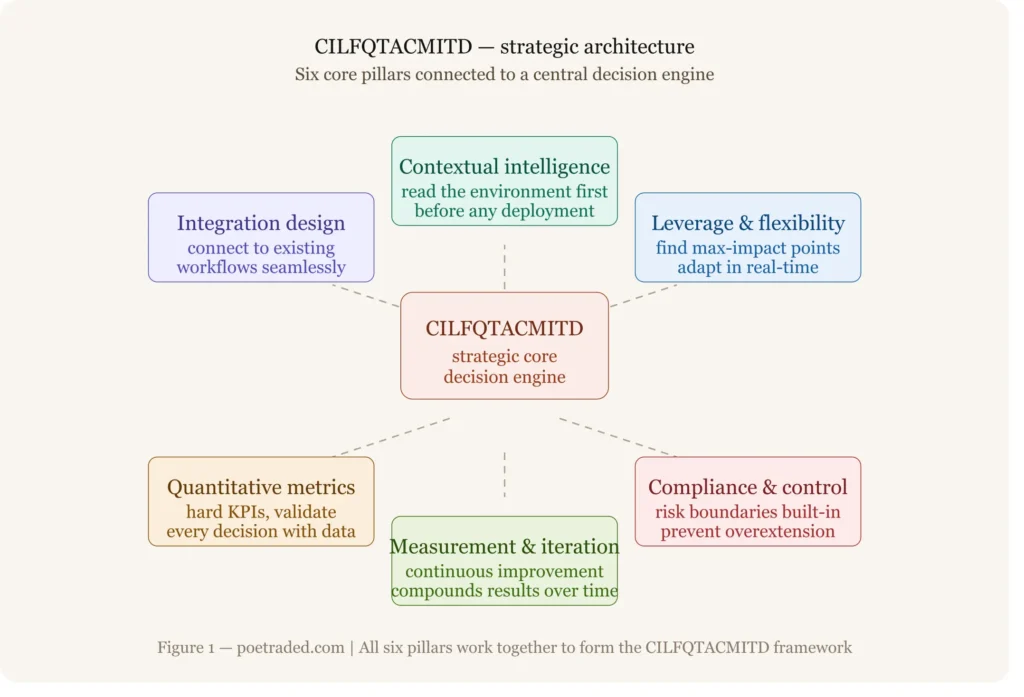
Before answering whether CILFQTACMITD deployment at large volumes is wise, understanding the framework’s architecture is essential. Each component of CILFQTACMITD serves a distinct function, and together they create a compounding strategic engine.
The Six Core Pillars
Contextual Intelligence: Reading the environment accurately — market dynamics, competitive landscape, and personal constraints — before any deployment begins.
Integration Design: Connecting the methodology with existing workflows and strategic priorities so it amplifies rather than disrupts current operations.
Leverage and Flexibility: Identifying maximum-impact deployment points and building adaptive layers that allow real-time adjustments based on live performance feedback.
Quantitative Metrics: Hard KPIs that allow practitioners to measure outcomes, validate effectiveness, and justify scaling decisions with evidence rather than assumption.
Compliance and Control: Regulatory awareness and built-in risk boundaries that prevent overextension in regulated industries and high-stakes operating environments.
Measurement and Iteration: Continuous improvement cycles that compound performance gains over time — the engine behind long-term sustainable results at any volume level.
Can I Use a Lot of CILFQTACMITD? The Direct Answer
Here is the direct, evidence-based answer: yes — but only when your capability level supports that volume. Using this framework extensively is entirely achievable, but doing so responsibly requires that your knowledge, infrastructure, and risk controls have matured enough to sustain that scale. The question is not whether large-scale use is possible. The question is whether you are ready for it right now.
Three Experience-Based Scenarios
| Beginner — Start Small, Learn First Operate at 10–20% of capacity weekly. Master feedback loops and foundational mechanics before any scaling. Rushing high volumes at this stage multiplies errors, not results. |
| Intermediate — Scale Incrementally Work at 30–60% capacity daily to weekly. Phased increases paired with tight KPI monitoring are the safest — and fastest — path toward higher deployment volumes. |
| Advanced / Expert — High-Volume Systematic Use Operate at 60–100%+ capacity continuously — but only with automated controls, real-time monitoring dashboards, and documented contingency protocols already in place. |
Key Statistics
▸ 73% of structured users report measurable gains within 90 days of deployment
▸ 2x average efficiency improvement at optimal deployment volume
▸ 48% lower error rate when deployment protocols are strictly followed
▸ 3–5x greater ROI for experienced users vs beginners at equal volume
| Most Common Mistake Equating “more volume” with “better results.” Volume without structure amplifies existing weaknesses. Always build your knowledge base and risk framework before increasing operational scale — not after. |
Key Benefits of Using CILFQTACMITD
When deployed at the right volume with appropriate oversight, this methodology delivers a compelling suite of competitive advantages across trading, crypto, marketing, real estate, and general business strategy.
- Enhanced Decision Accuracy: The quantitative framework provides real-time signals that dramatically sharpen judgment in high-stakes or fast-moving environments, replacing guesswork with evidence-based action.
- Horizontal and Vertical Scalability: Unlike rigid legacy systems, this approach scales in breadth across teams and in depth across complexity layers without proportional increases in cost or effort.
- Built-in Risk Modulation: Risk management is not an add-on — it is woven into the core architecture, allowing high-volume deployment while maintaining acceptable risk exposure throughout.
- Compound Performance Over Time: Systematic, high-frequency deployment compounds in effectiveness. Each iteration builds the knowledge base, making every subsequent application more precise and impactful.
- Cross-Domain Versatility: The underlying principles translate effectively across financial markets, content marketing, real estate, and operational management, giving practitioners one framework for many use cases.
- Cost Efficiency at Scale: Per-unit deployment cost decreases as volume grows, making large-scale use increasingly economical — particularly attractive for businesses and institutional users.
- Automation Compatibility: Repetitive, rule-based components can be fully automated, enabling large-scale continuous deployment with minimal manual oversight once properly configured.
- Sustained Competitive Differentiation: Organizations applying this framework effectively and consistently outperform those using conventional methods — especially in volatile, complex, or rapidly shifting environments.
Risks of Overusing CILFQTACMITD
Like any powerful strategic tool, excessive or poorly managed deployment introduces real risks that can erase the gains from responsible use. Understanding these risks is what separates professional practitioners from impulsive ones.
- The Saturation Effect: Beyond a critical threshold, returns flatten rapidly. Pushing deployment past the optimal zone produces diminishing or even negative results regardless of how much additional effort is applied.
- System and Workflow Overload: High deployment volumes can overwhelm existing infrastructure, creating bottlenecks, processing delays, and decision fatigue that negate the methodology’s core advantages.
- Regulatory and Compliance Exposure: Many industries — particularly finance, healthcare, and regulated markets — impose explicit limits on deployment frequency and volume. Exceeding those limits creates legal exposure and reputational risk.
- Strategic Dependency and Blind Spots: Over-reliance on any single framework reduces organizational resilience. Teams stop thinking critically and defer entirely to outputs — a dangerous position when the framework underperforms or inputs degrade.
- Data Quality Amplification: At scale, poor-quality inputs are not filtered out — they are amplified. The garbage-in-garbage-out principle applies with particular force at high deployment volumes.
- Unchecked Resource Consumption: Without clear budgeting guardrails, high-volume deployment can consume resources disproportionate to the value it generates, especially during ramp-up phases before optimization is complete.
| The Core Principle Use as much as your current infrastructure, expertise, and risk tolerance can responsibly support — not as much as you simply want to use. Scale in measured increments. Validate results at every stage. Only then increase volume further. |
How Much Is Too Much? Usage Thresholds Explained
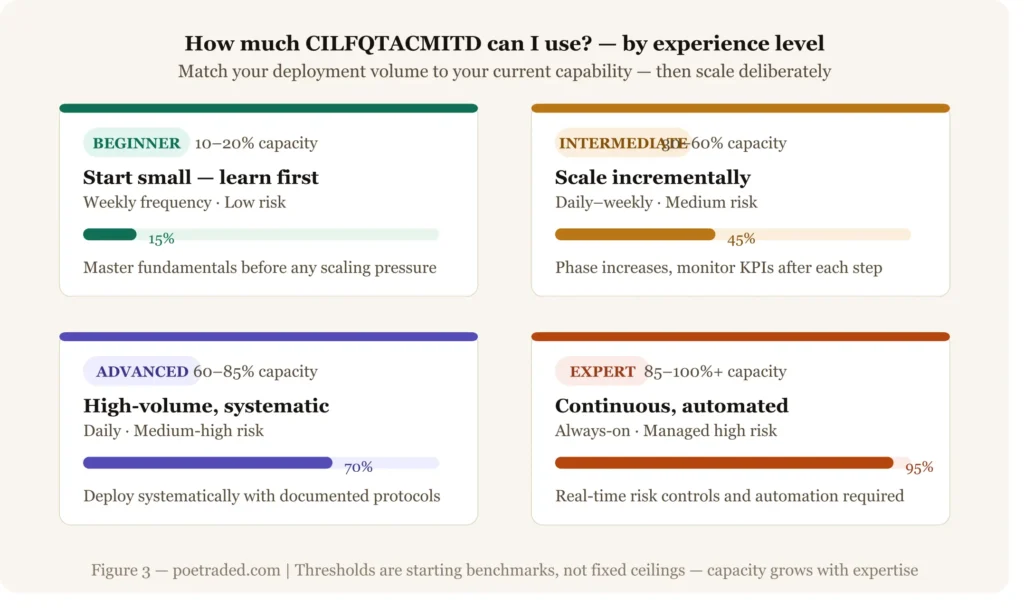
Defining the right volume is always context-dependent. However, the following framework provides practical, experience-calibrated thresholds that serve as reliable starting benchmarks for the vast majority of practitioners across industries.
| Experience Level | Recommended Volume | Frequency | Risk Rating | Primary Guidance |
| Beginner | 10–20% of capacity | Weekly | Low | Master fundamentals; avoid early scaling pressure entirely |
| Intermediate | 30–60% of capacity | Daily–Weekly | Medium | Phase increases; monitor KPIs carefully after each step up |
| Advanced | 60–85% of capacity | Daily | Med-High | Deploy systematically with fully documented protocols |
| Expert / Institutional | 85–100%+ | Continuous / Automated | Managed High | Full automation with real-time risk controls is mandatory |
These thresholds are not fixed ceilings — they are dynamic starting points. As your expertise deepens and your systems mature, the right volume increases organically. The critical insight is that capacity grows through deliberate, structured practice, not through ambition or urgency alone.
7 Expert Strategies for Effective Deployment
Whether operating at modest volume or scaling toward institutional-level deployment, these seven strategies consistently separate high performers from everyone else.
- Run Quarterly Recalibration Reviews: Strategic environments change. What works at 60% capacity in Q1 may need adjustment by Q3 as competitive dynamics, data availability, and business objectives shift.
- Start with a Full Baseline Audit: Before increasing any volume, document your current state precisely. Understand what is working, what is not, and where the highest-leverage gaps exist. A baseline audit prevents you from scaling problems instead of solutions.
- Define SMART Objectives at Every Volume Tier: Vague goals produce vague results. For each deployment increase, set Specific, Measurable, Achievable, Relevant, and Time-bound targets.
- Layer Complexity in 3–4 Week Sprint Cycles: Add one new component or increase volume by a defined increment each sprint. Evaluate results before adding the next layer. This iterative cadence ensures every addition is validated before the next begins.
- Integrate Complementary Data and Analytics Tools: This methodology performs best when layered with real-time data analytics, performance monitoring dashboards, and automated feedback loops. Isolated deployment consistently underperforms integrated deployment at every volume level.
- Automate the Repetitive — Reserve the Strategic: Identify which deployment elements are rule-based and time-consuming, then automate them fully. Reserve human decision-making for strategic and contextual judgments that no automation can replicate reliably.
- Build and Test an Emergency Rollback Protocol: High-volume deployment occasionally produces unexpected outputs or system stress. A pre-tested rollback protocol — written before it is needed — allows rapid recovery without cascading damage.
CILFQTACMITD vs Alternatives — Full Comparison
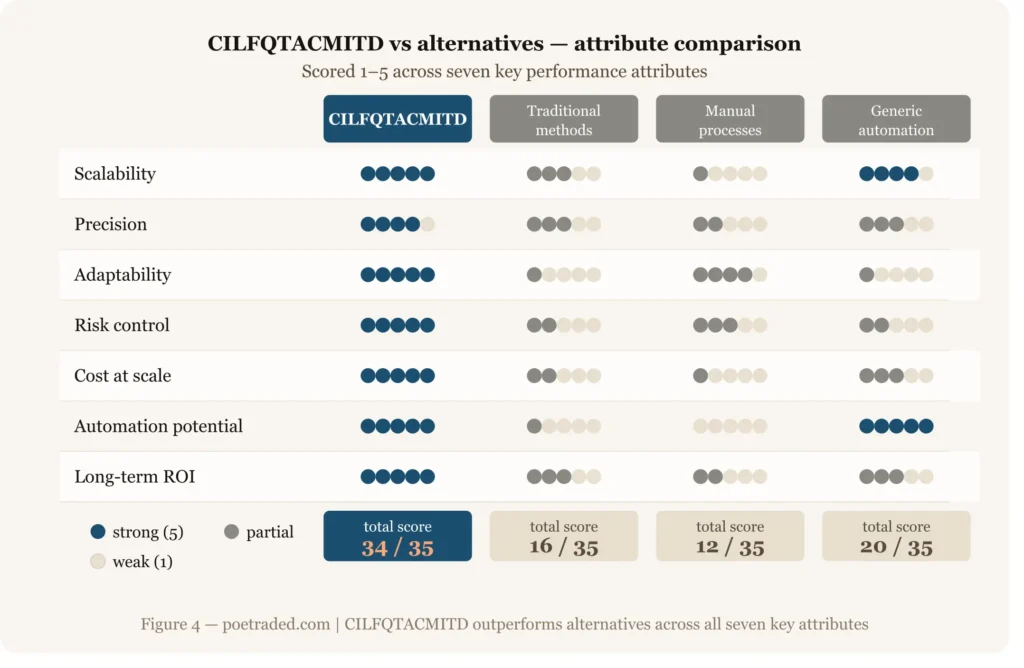
To understand the true value of this framework, it helps to benchmark it directly against the most common alternative approaches that practitioners currently rely on.
| Attribute | CILFQTACMITD | Traditional Methods | Manual Processes | Generic Automation | Hybrid Models |
| Scalability | Very High | Moderate | Low | High | Moderate |
| Precision | High | Moderate | Variable | Moderate | High |
| Adaptability | Very High | Low | High | Low | Moderate |
| Built-in Risk Control | Native | External Only | Human-Dep. | Limited | Partial |
| Cost at Scale | Decreasing | Increasing | Very High | Stable | Variable |
| Learning Curve | Moderate | Low | Low | Moderate | High |
| Cross-Domain Use | Excellent | Domain-Specific | Limited | Moderate | Moderate |
| Automation Potential | Very High | Low | None | Very High | Moderate |
| Long-term ROI | Compounding | Linear | Flat/Declining | Stable | Good |
Best Practices and Implementation Framework
Turning your CILFQTACMITD strategy into consistent, repeatable results requires more than good intentions. It requires a structured implementation framework that every practitioner — regardless of experience level — can follow and adapt.
The 6-Phase Implementation Framework
- Discovery: Map your current environment, identify existing gaps, and define the specific measurable outcomes you expect. Set clear baselines before any deployment begins — without them, you cannot confirm improvement.
- Design: Build your initial deployment architecture — which components, at what volume, in which sequence, integrated with which existing tools. Design for flexibility from the outset so adaptation later is seamless.
- Pilot Deployment: Launch at 10–20% of your intended volume in a controlled, lower-stakes environment. Collect real-world performance data and compare it directly against your established baselines.
- Validation: Analyze pilot data rigorously. Confirm results align with your SMART objectives. Identify any unexpected behaviors or emerging risks before scaling volume further.
- Scaled Rollout: Increase volume in 20–25% increments per sprint cycle. Maintain formal checkpoints between each increment. Automate repetitive components at this stage to free up strategic capacity.
- Optimization and Maintenance: Run quarterly recalibration reviews. Update protocols as your environment, objectives, or risk tolerance evolves. Continuously reinvest learnings into the next deployment cycle.
Non-Negotiable Best Practices
- Document everything: Detailed logs allow proactive pattern recognition, faster diagnosis of issues, and clear evidence of value when justifying further investment or scaling decisions to stakeholders.
- Test before full deployment: Real-world behavior at new volume levels always differs somewhat from theoretical models. Controlled testing before full rollout is non-negotiable at every experience level.
- Invest in continuous education: The strategic landscape evolves rapidly. Practitioners committed to ongoing learning maintain a meaningful, compounding edge over those who stop after initial training.
- Build a peer network: Communities of practitioners who share insights, flag emerging risks, and collaborate on improvements accelerate growth and drastically reduce costly individual trial and error.
- Never skip risk reviews at volume transitions: Every time you increase deployment volume, conduct a formal risk review. What was acceptable at lower volumes may require entirely new controls at higher ones.
| Pro Insight The most consistently high-performing practitioners are not those deploying the greatest volume. They are those whose deployment volume is most precisely aligned with their current capability level. Precision at 60% outperforms ambition at 100% every single time. |
Frequently Asked Questions
Can I use a lot of CILFQTACMITD as a complete beginner?
Beginners should resist the urge to start at high volume. Begin at 10–20% of theoretical capacity to build genuine understanding of feedback loops, response patterns, and risk signals. Scaling too fast before this foundation exists is the single most common reason for early failures. A measured start produces better long-term outcomes than an ambitious but under-prepared one.
What actually happens if I exceed the optimal deployment volume?
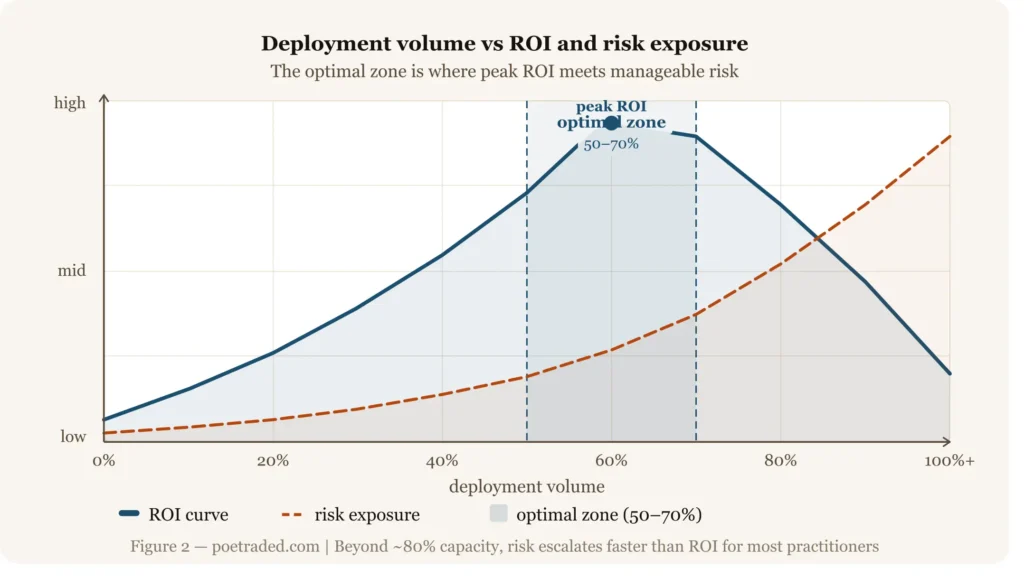
Beyond the optimal zone — typically 50–70% for most practitioners — the ROI curve flattens and then declines while the risk curve accelerates upward. In practice this means more effort for less return, increased error frequency, potential system strain, and elevated compliance risk in regulated industries.
Is there a universal maximum safe deployment limit?
No universal fixed maximum exists — the right limit is entirely contextual. It depends on your operational infrastructure, experience depth, risk tolerance, regulatory environment, and input data quality. Expert and institutional users routinely operate at or near 100% capacity with proper automation and risk controls.
How do I know if my deployment is actually working?
Track the specific KPIs defined during your objective-setting phase. Effective deployment should produce measurable improvement in your target metrics within the defined timeframe. Flat or declining results despite increased volume typically indicate saturation, data quality issues, misconfigured integration, or the need for recalibration.
Does my industry significantly affect how much I can safely deploy?
Yes — significantly. Financial services, healthcare, and other regulated industries often impose explicit limits on deployment frequency and volume for compliance reasons. Exceeding those limits creates legal exposure regardless of your internal competency. Always verify industry-specific requirements before scaling in regulated sectors.
Can this methodology be combined with other strategic frameworks?
Absolutely — and in most cases it should be. This approach is specifically designed for integration with complementary tools and frameworks. It performs best when layered with real-time data analytics, performance dashboards, and automated feedback systems. Isolated deployment consistently underperforms integrated deployment by a meaningful margin.
How long does it realistically take to see results?
For most practitioners following the 6-phase framework, measurable results begin appearing within 30–60 days of structured pilot deployment. Full ROI realization typically takes 90–180 days as compounding effects accumulate. Practitioners who rush past the pilot and validation phases often report no clear results — not because the approach is ineffective, but because they lack the baseline data needed to recognize improvement when it occurs.
What is the single most important first step to take today?
Start with the Discovery phase. Conduct a full audit of your current environment, define three to five specific measurable outcomes you want to achieve, and set clear baselines. Do not deploy anything until this step is complete. A well-executed baseline audit is what separates practitioners who scale successfully from those who deploy impulsively.
Conclusion and Key Takeaways
The definitive answer to “can I use a lot of CILFQTACMITD?” is a clear and evidence-backed yes — provided you have the right structure in place. High-volume deployment is not only possible but genuinely advantageous for practitioners who have built the right foundation. The methodology scales elegantly, compounds its returns over time, and outperforms conventional alternatives across virtually every meaningful performance dimension.
But volume alone is never a strategy. The professionals achieving the most are those who deploy intelligently — auditing before scaling, validating before repeating, adapting before stagnation takes hold. Match your deployment volume precisely to your current capability level. Scale deliberately and in measured increments. Measure relentlessly. Iterate continuously based on real evidence, not assumption.
That is the complete, honest, research-based answer. Now you have the full framework to act on it confidently — starting today.

Debbie Beidelman is a Senior IT Business Analyst at Presidio with an impressive suite of credentials — including an MBA, Project Management Professional (PMP) certification, and Supply Chain Management (SCM) expertise. With years of experience bridging the gap between technology strategy and business outcomes, Debbie brings a structured, analytical lens to her writing. At Poetraded, she covers topics at the intersection of business operations, financial planning, and market strategy — making enterprise-level thinking accessible to everyday readers and traders alike.