

The Update That Redefined an ARPG
Imagine logging into your favourite free-to-play action RPG one day and discovering that the entire game has been rebuilt from the ground up. That’s exactly what happened on August 4, 2017, when Grinding Gear Games released what is arguably the most significant update in Path of Exile history. So, what was Path of Exile 3.0, and why does the community still talk about it years later?
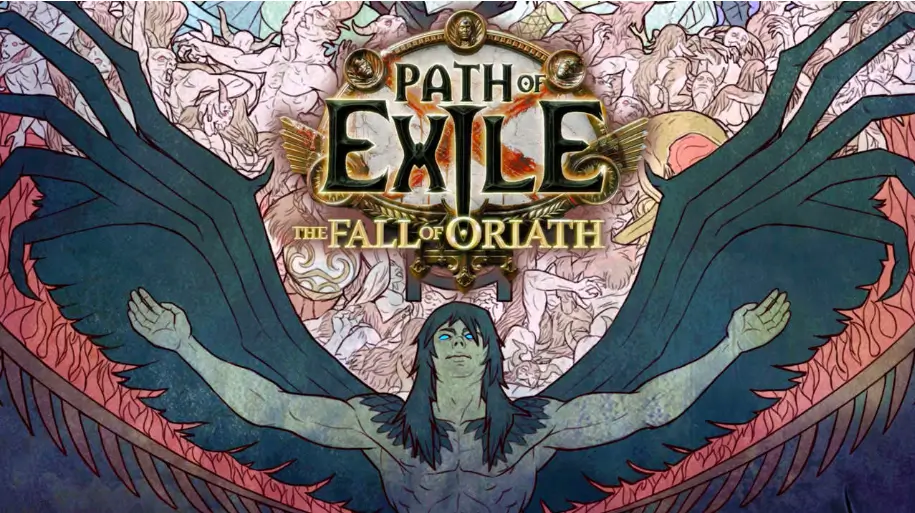
Path of Exile 3.0 — officially titled The Fall of Oriath — was a landmark expansion that didn’t just add new content; it fundamentally restructured how the game was played. From replacing the old three-difficulty system with a sweeping ten-act story campaign, to introducing the god-powered Pantheon system, what was Path of Exile 3.0 is a question that opens the door to understanding just how ambitious independent game business development can be. This guide covers every major change, why it mattered, and why it remains a pivotal moment in ARPG history.
What Was Path of Exile 3.0? A Quick Definition
Path of Exile 3.0, also known as The Fall of Oriath, was the sixth major expansion for Path of Exile, developed and published by Grinding Gear Games. Released on August 4, 2017, it introduced six brand-new acts, abolished the Cruel and Merciless difficulty modes, launched the Harbinger Challenge League, and debuted the Pantheon system — collectively making it the largest single update in the game’s history at the time.
In short, what was Path of Exile 3.0? It was the moment Path of Exile graduated from a promising niche ARPG into a world-class title capable of rivalling the Diablo franchise on its own terms.
The History Behind Path of Exile 3.0
How PoE Was Structured Before 3.0
Before understanding what was Path of Exile 3.0, it’s important to appreciate what existed before it. Prior to the expansion, Path of Exile’s campaign ran through four acts — Acts 1 through 4 — each repeated across three difficulty tiers: Normal, Cruel, and Merciless. Players effectively played through the same story content three times just to reach the endgame Maps system.
This design was inherited from classic ARPGs like Diablo II and served its purpose for years. However, as the game matured, the repetitive structure became one of the most commonly cited frustrations among both new and veteran players.
The Announcement and Beta Phase
Grinding Gear Games officially announced what would become Path of Exile 3.0 on February 15, 2017. The reveal was met with enormous excitement across the community. A beta phase followed on June 8, 2017, giving players their first real taste of the new campaign before the full release two months later.
The Six New Acts: Rebuilding the Campaign from the Ground Up
Acts 1–5: Revisiting Wraeclast with Fresh Eyes
What was Path of Exile 3.0’s most headline-grabbing feature? Without question, it was the addition of six brand-new acts, bringing the total campaign length from four acts across three difficulties to a single continuous ten-act playthrough. The expansion completely removed Cruel and Merciless difficulties, replacing them with this unified story experience.
The campaign was divided into two distinct parts:
- Part 1 (Acts 1–5): Follows the Exile through familiar Wraeclast locations up to the city of Oriath
- Part 2 (Acts 6–10): Returns to familiar areas, now transformed by the consequences of the Exile’s earlier actions
Acts 6–10: Consequences and Chaos
Acts 6 through 10 were set in the same geographic regions as Acts 1 through 5, but they were anything but recycled content. The developers made clear that the Exile’s earlier deeds had reshaped the world — gods previously suppressed by the Beast had broken free, and players had to confront them directly.
Key features of Part 2 included:
- Recontextualised environments — familiar zones visually and narratively transformed
- New boss encounters tied to the newly awakened gods
- Escalating narrative stakes as the consequences of Act 4’s climax rippled outward
- Defeating gods in Part 2 unlocked their power for use in the Pantheon system
This structure gave returning players a reason to re-engage with familiar zones while simultaneously offering fresh, coherent storytelling — a delicate balance that Grinding Gear Games pulled off remarkably well.
The Pantheon System: Harnessing Divine PowerWhat Is the Pantheon System?
One of the most mechanically interesting additions in what was Path of Exile 3.0 was the Pantheon system. As players defeated the gods scattered across Acts 6–10, they could claim those gods’ souls and convert their power into passive defensive bonuses for their characters.
The system worked as follows:
- Defeat a god during the Part 2 campaign
- Unlock their soul and its associated passive bonus
- Equip Major and Minor God powers to customise your defensive profile
- Upgrade powers by capturing boss souls using Divine Vessels in Map Device
Why the Pantheon System Mattered
The Pantheon system added a meaningful layer of defensive customisation that had previously been absent from PoE’s character-building toolkit. Rather than relying solely on gear and passive tree nodes for defence, players could now tailor situational protections — immunity to bleeding during certain encounters, reduced chill effect, life regeneration under specific conditions, and more.
This was particularly impactful for hardcore players and those pushing the endgame, where granular defensive optimisation directly influenced survival rates.
Removal of Cruel and Merciless: A Design Paradigm Shift
Why Grinding Gear Games Made the Change
The decision to abolish the three-difficulty structure was bold, especially given how deeply rooted that model was in ARPG tradition. But the reasoning was sound: repeating the same content three times was broadly considered a barrier to enjoyment, particularly for newer players.
By replacing repetition with ten genuinely distinct acts, Grinding Gear Games:
- Reduced new-player fatigue and drop-off
- Created space for richer, more complex storytelling
- Allowed each act to have its own unique visual and mechanical identity
- Ensured the campaign felt like a journey rather than a checklist
The trade-off was that some veteran players missed the grind of difficulty progression. However, the overwhelmingly positive response to the change confirmed that this was the right direction for the game’s long-term health.
The Harbinger Challenge League
What Was the Harbinger League?
Every major Path of Exile expansion launches alongside a Challenge League — a fresh economy where players can compete, experiment, and earn exclusive cosmetic rewards. What was Path of Exile 3.0’s paired league? The Harbinger League, which introduced a brand-new encounter type to the game.
Harbingers were mysterious, powerful entities that appeared throughout Wraeclast. Here’s how they worked:
- Harbingers summoned and empowered monsters from the surrounding area
- Defeating a Harbinger rewarded players with currency shards — fragments of both existing and entirely new currency types
- New currency items introduced included Harbinger’s Orbs, Engineer’s Orbs, and Orbs of Horizons
- Collecting enough shards of a new currency type could lead players toward the source of the Harbinger invasion
Harbinger League Challenges and Rewards
The Harbinger League included 40 new challenges, with cosmetic rewards at milestone completions:
| Challenges Completed | Reward |
|---|---|
| 12 | Harbinger Glowing Eyes Effect |
| 24 | Harbinger Crown Effect |
| 36 | Harbinger Character Effect |
| 19+ (every 3rd) | Harbinger Totem Pole pieces |
These rewards were exclusively available during the league period, making them prized collectibles in the broader PoE community.
New Skill Gems and Mechanical Overhauls
Fresh Build Possibilities in 3.0
What was Path of Exile 3.0 without new tools for players to experiment with? The expansion introduced several new skill gems that opened up entirely new build archetypes:
- Dark Pact — Sacrificed skeleton minions to deal area chaos damage, enabling a unique minion-caster hybrid style
- Soulrend — A channelled lightning skill that exploded projectiles on release
- Momentum Support — Rewarded consistent skill use with stacking movement and attack speed buffs
- New Strength, Dexterity, and Intelligence support gems expanded the support gem matrix significantly
Ailment System Rework
Path of Exile 3.0 also introduced significant changes to how ailments (bleed and poison) functioned. Key changes included:
- Bleed and poison were formally classified as ailments, bringing them under a unified mechanical framework
- Ailment damage now scaled off the hit’s base damage rather than final hit damage, removing the controversial double-dipping mechanic that had allowed certain builds to multiply damage to extreme levels
- Ailments gained their own Critical Strike Multiplier, creating more consistent and predictable interactions
This rework was widely considered a healthy balance change, even if it significantly nerfed some previously dominant build archetypes.
Technical and Visual Improvements
DirectX 11, 4K Support, and Dynamic Resolution
What was Path of Exile 3.0 from a technical standpoint? Beyond the content changes, the expansion brought meaningful engine upgrades:
- DirectX 11 became the default rendering option
- 4K resolution support was introduced, making the game viable on high-end displays
- A new Dynamic Resolution system was implemented to address the infamous screen-freeze issues caused by large numbers of on-screen particles
- New lighting quality options were added
- A new water rendering technology was introduced across the game world
The Automap
One of the most beloved quality-of-life additions in 3.0 was the new Automap, which revealed the map as players explored rather than requiring them to manually uncover it. This feature proved especially useful during endgame Map clearing, helping players navigate more efficiently.
Path of Exile on Xbox One: A Historic Milestone
Console Debut Alongside 3.0
What was Path of Exile 3.0 in terms of platform reach? It also marked the game’s debut on Xbox One, announced during Microsoft’s E3 2017 press conference. The Xbox version launched on August 24, 2017, just three weeks after the PC release.
The console version featured the full game with identical content to its PC counterpart, and retained the same free-to-play model built around cosmetic microtransactions and stash tab purchases. This expansion of the game’s platform presence significantly broadened Path of Exile’s audience and cemented its status as a major ARPG franchise.
Path of Exile 3.0 vs. Previous Expansions: A Comparison
| Feature | Pre-3.0 | Path of Exile 3.0 |
|---|---|---|
| Campaign Length | 4 Acts × 3 Difficulties | 10 Acts (single playthrough) |
| Difficulty Structure | Normal / Cruel / Merciless | Single unified campaign |
| Pantheon System | Not present | Fully introduced |
| Challenge League | Varies by prior expansion | Harbinger League |
| Platform Availability | PC only | PC + Xbox One |
| Rendering | DirectX 9 default | DirectX 11 default |
| Campaign Repetition | High (same content ×3) | Eliminated |
Reception: How Did Players and Critics React?
Community Response
The community reaction to what was Path of Exile 3.0 was largely celebratory. The removal of the difficulty loop was praised almost universally, and the new acts were considered among the best-designed content in the game’s history. The Harbinger League, while considered less mechanically deep than some prior leagues, was a solid introduction to currency-shard economies.
Critics noted that some long-requested features — such as a proper in-game trading system and guild improvements — were still absent. The Labyrinth endgame, which was adjusted in 3.0, also drew some negative feedback from a subset of the player base who felt the changes made it worse for endgame farming.
Long-Term Legacy
Despite minor criticisms, Path of Exile 3.0 is widely regarded as the expansion that defined the modern era of Path of Exile. The ten-act campaign structure introduced in 3.0 remained the backbone of the game’s progression system for years. The Pantheon system, similarly, became a beloved and enduring feature of PoE’s character-building ecosystem.
Key Takeaways: What Was Path of Exile 3.0?
Here’s a quick summary of the most important points:
- Released August 4, 2017 by Grinding Gear Games as the sixth major expansion
- Added six new acts (Acts 5–10), replacing the three-difficulty structure with a single ten-act campaign
- Introduced the Pantheon system, allowing players to claim defensive powers from defeated gods
- Launched the Harbinger Challenge League with new encounter types and currency shards
- Debuted on Xbox One on August 24, 2017 — the game’s first console release
- Overhauled ailment mechanics, removing double-dipping and rebalancing bleed and poison
- Introduced new skill gems including Dark Pact and Soulrend
- Brought major technical upgrades including DirectX 11, 4K support, and Dynamic Resolution
- Fundamentally changed the new-player experience by eliminating repetitive difficulty cycling
Frequently Asked Questions (FAQ)
1: What does “3.0” refer to in Path of Exile 3.0?
The “3.0” refers to the version number assigned to the Fall of Oriath update. Grinding Gear Games uses a versioning system where major expansions increment the primary version number, signalling a significant overhaul of the game rather than a smaller patch or league release.
2: Was Path of Exile 3.0 free to play?
Yes. Path of Exile has always been free to play, and what was Path of Exile 3.0 was no exception. The expansion’s content was available to all players at no cost. Revenue is generated through optional cosmetic purchases and stash tab expansions.
3: Did Path of Exile 3.0 reset player progress?
The new Harbinger Challenge League did reset progress for those who chose to participate, as is standard for all PoE leagues. However, existing characters in Standard and Hardcore leagues were not affected — they were automatically granted progression equivalent to having completed all mandatory quests through the Fall of Oriath.
4: How many players played Path of Exile 3.0 at launch?
While exact concurrent player figures for 3.0 specifically are not officially published, the expansion drove massive peak concurrency numbers on Steam and was broadly recognised as a major milestone for the game’s growth, with observers noting that PoE had nearly double the Twitch viewership of Diablo III during the period.
5: Is the ten-act campaign from 3.0 still in the game today?
Yes. The ten-act campaign structure introduced in Path of Exile 3.0 remained the foundation of the game’s story progression through the lifetime of Path of Exile 1, serving every subsequent expansion and league as the core levelling experience.
6: What came after Path of Exile 3.0?
The first major update following 3.0 was Patch 3.1 “War for the Atlas”, released on December 8, 2017, which introduced the Atlas of Worlds endgame overhaul and the Abyss Challenge League.
Conclusion: A Turning Point Worth Remembering
So, what was Path of Exile 3.0? It was the moment a dedicated New Zealand indie studio took a beloved but imperfect game and transformed it into something genuinely world-class. By stripping away repetitive difficulty cycling, replacing it with a cohesive and dramatic ten-act story, introducing the elegant Pantheon system, and launching simultaneously on a major console platform, Grinding Gear Games demonstrated exactly the kind of ambition and player-first design philosophy that has kept Path of Exile relevant for well over a decade.
Whether you’re a veteran exile who remembers grinding Merciless Malachai, or a newer player curious about the history of one of gaming’s most celebrated ARPGs, understanding what was Path of Exile 3.0 is understanding the DNA of the game as it exists today.
Ready to dive into Wraeclast? Path of Exile remains free to play on PC. You can download it directly from the official Path of Exile website or through Steam — and the ten-act campaign that 3.0 built still awaits you.
Sources and Further Reading
- Official Path of Exile Wiki — The Fall of Oriath:
- The_Fall_of_Oriath — The definitive reference for all patch notes, system descriptions, and content lists from the 3.0 expansion.
- Official Path of Exile Wiki — Version 3.0.0 Patch Notes:
- Version_3.0.0 — Complete patch notes covering every skill gem, league mechanic, and balance change introduced in 3.0.
- Path of Exile Fandom Wiki — The Fall of Oriath:
- The_Fall_of_Oriath — Community-maintained supplementary coverage of the expansion’s lore, bosses, and items.

Ethan Spruill is an incoming Data Analyst at CACI and a Business Analytics graduate from George Mason University (GMU). A certified Lean Six Sigma Practitioner through MSI and Finance Chair of the GMU NAACP chapter, Ethan combines academic rigor with real-world financial leadership. His background in process optimization, data analysis, and community finance makes him a sharp and versatile voice on Poetraded. He writes on topics ranging from trading strategies and market data to business efficiency and financial literacy for the next generation of investors.